Tuesday, March 29, 2011

POPE SPEAKS TO UNION WORKERS


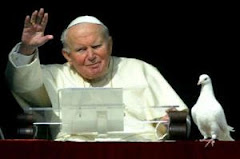
The Holy Father, Pope Benedict XVI received a pilgrimage delegation of workers and trade unionists in an audience at the Vatican on March 27, 2011. The Holy Father greeted the workers with the words:


Dear brothers and sisters, I am very happy to receive you this morning and to offer my cordial greeting to the officials who are present, the workers and to all of you who have come as pilgrims to the See of Peter. A special greeting to Bishop Vincenzo Paglia, whom I thank for the words that he addressed to me also on your behalf. You have come in great numbers to this meeting -- I am sorry that not everyone was able to come inside -- on the occasion of the 30th anniversary of John Paul II's visit to Terni. Today we would like to recall him in a special way for the love that he showed for the working world; we can almost hear him repeat the first words that he spoke shortly after he arrived at Terni: "The main reason for this visit, which takes place on St. Joseph's day … is to bring a word of encouragement to all the workers and express my solidarity with them, my friendship and my affection" (Speech to Officials in Terni, March 19, 1981). I make these sentiments my own and from my heart I embrace all of you and your families.


The Pope went on to connect the Holy Eucharist and the Mass with the social solidarity workers express when they struggle for economic justice. The Pope called for "more solidarity." He spoke of the right for workers to have rest on the weekends and about how worker solidarity can address the important issue of workplace safety.

Friday, March 25, 2011

President Obama at Tomb of Archbishop Oscar Romero


Presidente Obama hace historia con visita a tumba de Monseñor Romero


El Presidente de Estados Unidos, Barack Obama, cierra sus ojos ante el sepulcro de Monseñor Oscar Arnulfo Romero, en señal de reverencia, acompañado por el Arzobispo de San Salvador, José Luis Escobar Alas.


Gabriela Castellón Fajardo
Redacción Diario Co Latino

A las 2:30 de la tarde de este martes 22 de marzo, las calles aledañas a la Catedral Metropolitana están cerradas. El Presidente de los Estados Unidos de América, Barack Obama, llegaría a las 5 p.m., para realizar el recorrido ya previsto en la agenda. Pero, aunque nadie lo sabe aún, la llegada del mandatario será a las 6:25 p.m. Esta tarde, Obama hará historia.

Luego de la reunión sostenida entre el mandatario estadounidense y el Presidente de la República, Mauricio Funes, se confirmó la visita que realizaría Obama, para conocer la cripta donde yacen los restos del arzobispo mártir, Monseñor Óscar Arnulfo Romero. Funes le agradece de antemano, por haber aceptado la invitación.

Son las 3 p.m. y frente a Catedral sólo está el grupo de periodistas que ingresarán a distintos puntos incluidos en el recorrido. En el centro de San Salvador hace calor, hay brisa y no hay vendedores.

Yo quería ver, dice Julia, en tono de queja. Ella, hasta hace unos minutos, estaba ofreciendo atol a todo el que pasaba cerca de su puesto. Sin embargo, se tiene que largar. Porque, sin autorización, nadie puede estar aquí, anuncia un agente de seguridad.

El presidente Obama incluyó en su agenda la visita a la efigie de Monseñor Romero en Catedral, como muestra de reconocimiento a la labor humana que impulsó, y por la que murió, el arzobispo.

A las cinco de la tarde, los periodistas esperaban en los puntos asignados. Antes, los encargados de la seguridad del mandatario estadounidense habían hecho su trabajo. Una revisión exhaustiva y al detalle. Con lista en mano, para evitar a algún colado.

Cuatro encargados de seguridad reciben al grupo que ingresa al lugar donde reposa Monseñor Romero. Vigilan, esperan a que Obama haga su llegada.

Hay helicópteros sobrevolando el centro. El presidente estadounidense está por llegar. Han pasado 30 minutos. Son las 6:25 p.m. y Obama ingresa por el portón poniente. Minutos antes, Funes había ingresado por la entrada principal.
Monseñor José Luis Escobar Alas y el presidente Funes le reciben. Escobar Alas inicia la explicación que expone la historia de Catedral. A los tres les acompañan el Secretario Privado de la Presidencia, Francisco Cáceres, y el Subsecretario de Asuntos Hemisféricos, Arturo Valenzuela.

Luego de la exposición sobre las pinturas y la arquitectura del lugar, Funes, Obama y el Arzobispo bajan. Se dirigen a la cripta.

Son las 6:37 p.m. y un grupo de al menos 18 periodistas extranjeros bajan corriendo las gradas. Obama está por entrar. Tres minutos después, hace su entrada.

El arzobispo de San Salvador explica la historia de Monseñor Romero. Mientras, una de las dos traductoras que están con Obama se pasea de un lado a otro, traduciendo frase por frase. Funes observa. Los periodistas callan. Los vigilantes siguen pendientes del movimiento. El sonido de los flashes se repite y parece que no fuera a terminar nunca.
Entonces, llega el momento. Escobar Alas termina su exposición. Obama guarda silencio y cierra sus ojos, frente a la efigie de Monseñor Romero. Mantiene el gesto treinta segundos. El sonido de los flashes aumenta.

Funes le explica a Obama lo que significa Romero para el pueblo salvadoreño. Además, le cuenta que, por primera vez, el Gobierno ha pedido perdón por todas las atrocidades ocurridas en la guerra.

Minutos después, el presidente salvadoreño le anuncia a su homólogo que le hará la entrega de una de las 25 réplicas del mural que se encuentra en el Aeropuerto Internacional, que fue pintado por el artista Rafael Varela, en honor al 30 aniversario del martirio del arzobispo mártir. Este miércoles se cumplen 31 años del asesinato de San Romero de América”.

El presidente estadounidense agradece, y Escobar Alas explica la pieza. Obama se lleva la número 17. Pero el funcionario no se lleva sólo la pintura. Mientras estaban en la parte superior de Catedral, Escobar Alas le entregó el libro Romero, hombre, sacerdote y pastor, escrito por monseñor Jesús Delgado, ex párroco de Catedral y persona a cargo de la postulación de la beatificación de Romero en el Vaticano. Regresan la pintura al tubo donde estaba enrollada. Los tres se aprestan a encender una vela, para honrar los restos del Obispo Romero. Primero lo hace Obama, luego Funes. Escobar Alas enciende la última. Se retiran luego de 15 minutos, en el mismo orden. Un minuto después, los periodistas extranjeros salen corriendo del lugar. Obama ha hecho historia. No dijo nada. Su pensamiento no será expuesto en los medios de comunicación.

Sin embargo, el miércoles 23 de marzo, periódicos de diversos países del mundo tendrán la noticia: Obama visitó tumba de Monseñor Romero. México, Nicaragua, Argentina, Estados Unidos, Guatemala, Honduras, Venezuela y El Salvador fueron de los primeros medios en publicarlo. El nombre de Barack Obama y el de Monseñor Óscar Arnulfo Romero, juntos, ahora son parte de la historia.

Monday, March 7, 2011

Wisconsin Catholic Theologian On Worker Rights


Being fiscally responsible and fair

By Father Bryan N. Massingale

Gov. Scott Walker is a preacher's son. I'm hoping that he appreciates a good sermon.

As a Catholic priest and theologian, I believe it's time for a moral lesson about why Walker's efforts to eviscerate workers' rights clashes with centuries of teaching from diverse faith traditions and why religious leaders are standing in solidarity with the teachers, nurses and first responders rallying in Madison.

Catholic social teaching and Judeo-Christian values insist that workers must have an effective voice in ensuring safe working conditions, just wages and reasonable benefits. These basic principles honor the dignity of work and promote economic fairness. These gains were not easily won and must be protected today.

History is stained with the sweat and blood of those who struggled to win labor rights many of us now take for granted. Dorothy Day of the Catholic Worker movement, the Rev. Martin Luther King Jr., Cesar Chavez and Rabbi Abraham Joshua Heschel - to name just a few - all were inspired by their faith to stand with workers demanding living wages and working conditions consistent with human dignity.

Today, Pope Benedict XVI, the U.S. Conference of Catholic Bishops, Protestant clergy and prominent Jewish leaders consistently remind us that unions and collective bargaining are vital to ensuring that our economy serves the common good, not simply a privileged few.

We need to move beyond false choices. Fiscal responsibility and basic fairness are not competing values. Milwaukee Archbishop Jerome E. Listecki said it well in a recent statement: "Hard times do not nullify the moral obligation each of us has to respect the legitimate rights of workers." Yes, these are difficult times that call for shared sacrifice. It's unacceptable to ignore deficits, and prudent stewardship of public resources is simple common sense. But when the governor offers huge corporate tax breaks to some, yet refuses to even negotiate with tax-paying workers, this violates the principles of shared sacrifice and fiscal common sense. It's both immoral and fiscally irresponsible to ask those who teach our children, protect our communities and care for our sick loved ones to bear the greatest burden and give up basic rights that have provided economic opportunity for generations.

read the rest here: http://www.jsonline.com/news/opinion/117107323.html

The Rev. Bryan N. Massingale is associate professor of theological ethics at Marquette University. He is past president of the Catholic Theological Society of America.

Monday, February 28, 2011

BISHOP CALLS FOR UNION RIGHTS IN WISCONSIN


Bishop Gabino Zavala, Auxiliary of the Archdiocese of Los Angeles spoke to over 400 Catholic and other faith leaders in support of the rights of workers in Wisconsin last Friday.

Bishop Zavala reminded them that the Catholic Church has long recognized the rights of workers but stressed that now is the time for us to stand with them in solidarity.

The audience included many Catholic elected leaders of labor, clergy, religious and rank and file Catholic union members preparing to find news ways to support workers in Wisconsin.

Also commenting on the situation in Wisconsin was Fr. Sinclair Oubre, JCL, who proclaimed:

I find the scapegoating of public employees a scandal. So many of these people are the very persons who make our civic and community life possible. I wonder what all these folks who are so enthusiastic about "cutting out waste," will do when the local water department has been slashed in half, and their sewer line is clogged on the city side. How pleasant will their life be when no city employee will be able to deal with the consequences of a stopped up sewer line for a week. Or what are we going to do when our garbage pick up will be once every two weeks because half our garbage collectors have been declared "unnecessary government waste?"

Father Sinclair ministers to Catholic workers.

Friday, February 25, 2011

Poland to Wisconsin: Stand for Workers


Poland’s Solidarność Union Tells Wisconsin Workers: “Your Victory is Our Victory as Well”

Washington, DC — In a remarkable expression of international solidarity among working men and women, the president of “Solidarność” (“Solidarity”) – the Polish trade union whose determination and courage led to the fall of the Iron Curtain – has written an open letter in support of the public employees of Wisconsin.

Piotr Duda, president of Solidarność, said the 700,000 members of the Polish union wished “to express our solidarity and support for your struggle against the recent assault on trade unions and trade union rights unleashed by Governor Scott Walker.”

The letter is printed as a full-page advertisement in today’s issue of the Milwaukee Journal Sentinel.

“Dear Friends,” Duda’s letter continues, “please rest assured that our thoughts are with you during your protest, as we truly do hope that your just fight for decent working and living conditions, for the workers’ rights will be successful.”

“Your victory is our victory as well,” he said.

In the early 1980s, Solidarność persisted against great odds to win collective bargaining rights from the communist government of Poland. The union’s leader, Lech Walesa, was awarded the Nobel Peace Prize and was named Time magazine’s Man of the Year in 1981. He was elected President of Poland after the country secured its freedom.

The letter was sent to AFSCME Pres. Gerald W. McEntee with a request that it be conveyed to “Public Service Workers in the State of Wisconsin.” Download the open letter as a PDF.

Thursday, February 24, 2011

THE POPE AND THE WORKERS


"The repeated calls issued within the Church's social doctrine, beginning with Rerum Novarum, for the promotion of workers' associations that can defend their rights must therefore be honored today even more than in the past."

-- POPE BENEDICT XVI, Caritas in Veritate

Tuesday, February 22, 2011

CATHOLICS AND WORKER RIGHTS


Archbishop's Statement Regarding the Rights of Workers and the Value of Unions

Most Reverend Jerome E. Listecki, archbishop of Milwaukee and president of the Wisconsin Catholic Conference, has issued the following statement regarding the rights of workers and the value of unions.
February 16, 2011

The Church is well aware that difficult economic times call for hard choices and financial responsibility to further the common good. Our own dioceses and parishes have not been immune to the effects of the current economic difficulties. But hard times do not nullify the moral obligation each of us has to respect the legitimate rights of workers. As Pope Benedict wrote in his 2009 encyclical, Caritas in veritate:

Governments, for reasons of economic utility, often limit the freedom or the negotiating capacity of labor unions. Hence traditional networks of solidarity have more and more obstacles to overcome. The repeated calls issued within the Church's social doctrine, beginning with Rerum Novarum [60], for the promotion of workers' associations that can defend their rights must therefore be honored today even more than in the past, as a prompt and far-sighted response to the urgent need for new forms of cooperation at the international level, as well as the local level. [#25]

It does not follow from this that every claim made by workers or their representatives is valid. Every union, like every other economic actor, is called to work for the common good, to make sacrifices when required, and to adjust to new economic realities.

However, it is equally a mistake to marginalize or dismiss unions as impediments to economic growth. As Pope John Paul II wrote in 1981, “[a] union remains a constructive factor of social order and solidarity, and it is impossible to ignore it.” (Laborem exercens #20, emphasis in original)

It is especially in times of crisis that “new forms of cooperation” and open communication become essential. We request that lawmakers carefully consider the implications of this proposal and evaluate it in terms of its impact on the common good. We also appeal to everyone –lawmakers, citizens, workers, and labor unions – to move beyond divisive words and actions and work together, so that Wisconsin can recover in a humane way from the current fiscal crisis.